CAPITALISM IN THE PUBLIC REALM
IST- MARX – MARX-IST neon text
Under Capitalism, labour does not create only goods, it also produces itself and the worker as commodity.
Karl Marx
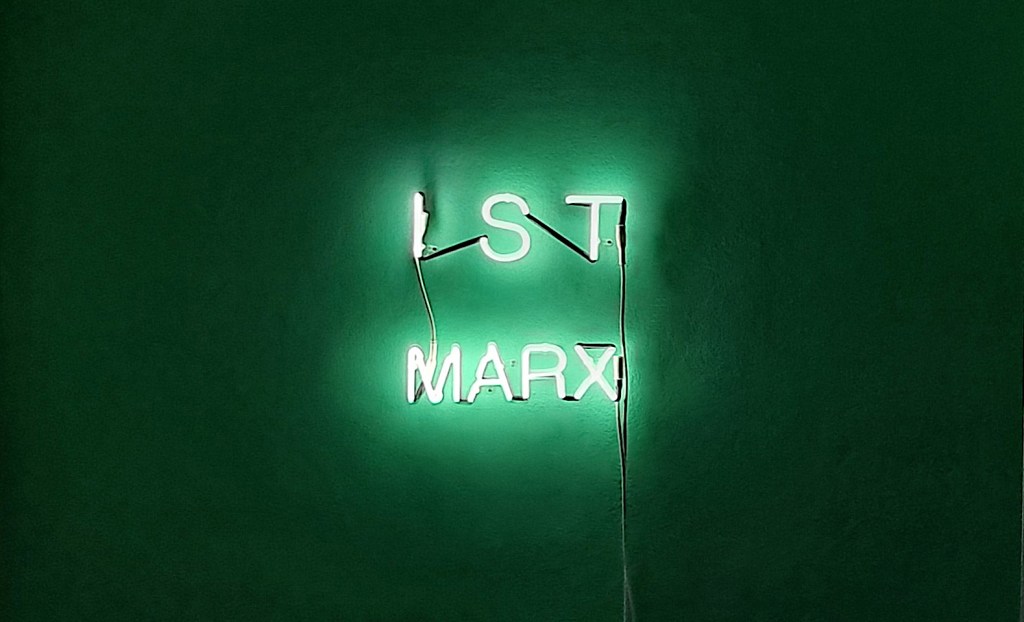
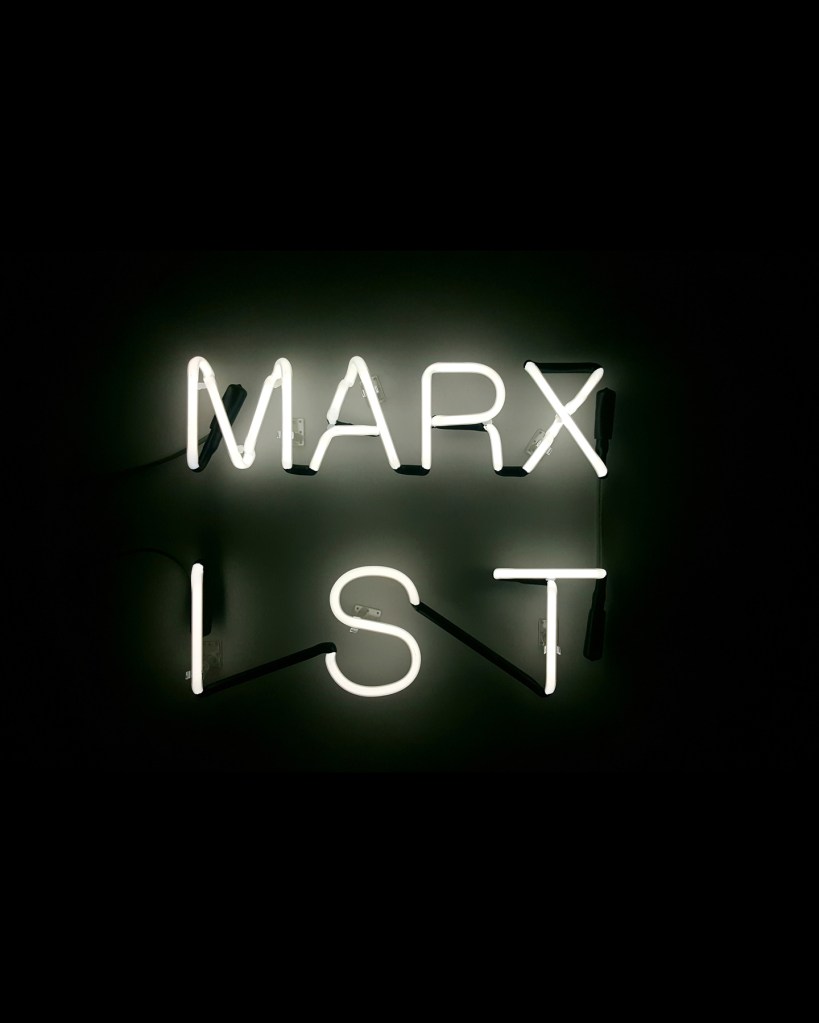
The neon text IST-MARX – MARX-IST, (2023 – a language word play in German on the term Marxist, questions the role of the ideologist, her purpose and impact on our contemporary crises – a struggle between power and the people, while referencing Shakespeare’s Hamlet, (Act 3, Scene 1), To be, or not to be, that is the question – that represents a contemplation on values, struggles, and purposes of life and death. In Senstad’s deconstruction of the charged term Marxist, the neon text itself becomes a question mark without the presence of its mark, asking the viewer to contemplate principals and societal value systems. Set against the backdrop of the Anthropocenic and ecocide, post-humanism and the resurrection of polarized economic class division – the art work signifies the repetitive cycles of human made struggles.
The neon text statement IST-MARX MARX-IST plays with multiple notions of equality as novelty. Established within the ideological, socio-economic and social-political concept of Marxism, to be defined as a “marxist” implies world views of class struggle, redistribution of wealth, global equality, societal transformation, and living according to sets of specific social-political concepts considered to be provocative by a western culturally gentrified and consumerist based society. Further, through the art work, the term Marxist has been transformed into a commodification of itself, inverting it’s political-economic founded dynamics, as well as pointing to the consumerist Iconification of historic revolutionaries popularized in the 1960’s.
In utilizing materials representing commerce, consumerism, culture economy, and the capital of the public sphere, the art work references Walter Benjamin’s ideas on Fordism i.e mass production, standardized generic production and evolution of mass consumerism established in the 20th century industrialized world. Senstad emphasizes here the paradox of polarized systems and the place of the individual citizen within the struggle between economies and technologies, public and private ownership of data, justice of autonomy, societal balance and health, seeking to activate processes of critical thought and response within the individual as citizen.
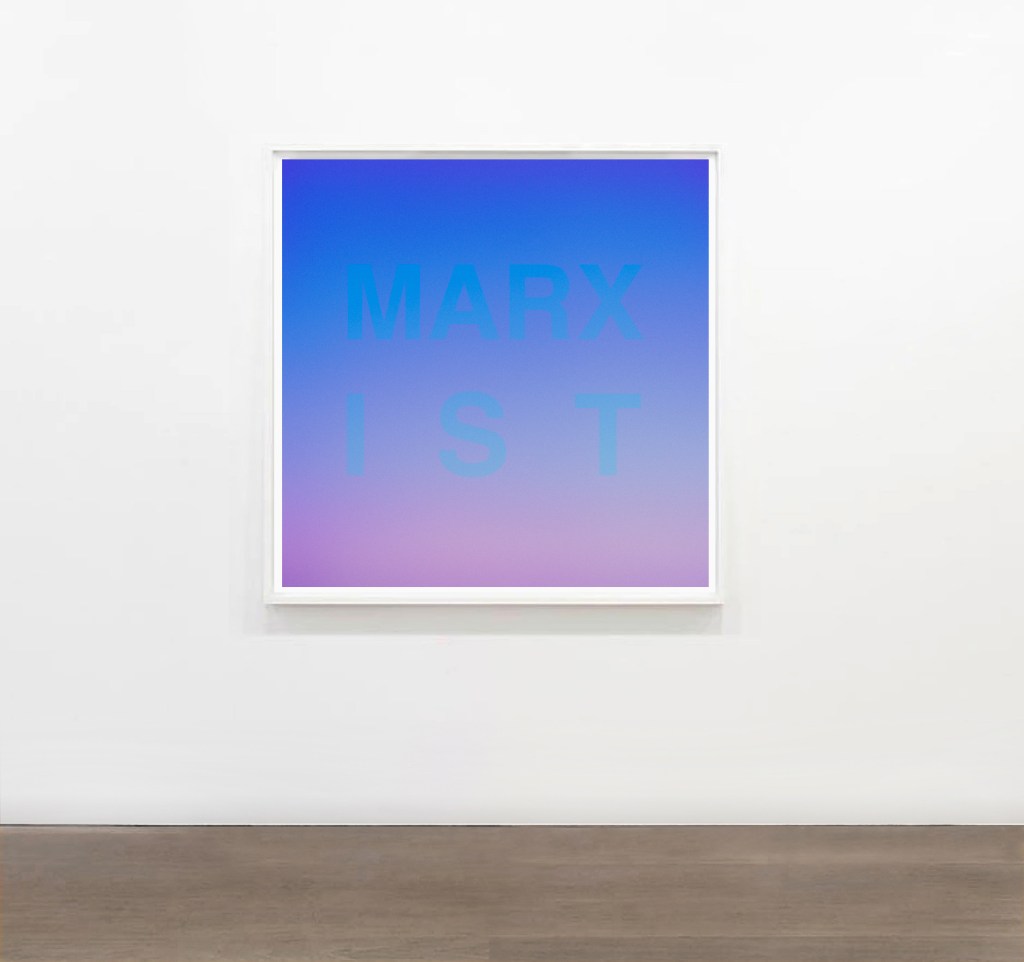
The work IST-MARX MARX-IST created for the exhibition is supported by Office for Contemporary Art Norway and he Norwegian Government’s Grant for Artists/ Kulturdirektoratet
 Capitalism in the Public Realm